Some stories make you look for clues long after the final page. The Famous Five are just such stories: secret passages, cryptic notes, old maps, and five friends who are determined to find out what is going on. Behind their adventures lies an equally fascinating story of publication, illustration and reinvention.
Who was Enid Blyton?
Enid Mary Blyton was born on 11 August 1897 in East Dulwich, south London, and died on 28 November 1968. Trained as a teacher, she became a prolific children’s author whose love of the countryside, dogs, school holidays and imaginative play shaped many of her stories.
She is associated not only with The Famous Five but also with The Secret Seven, Malory Towers and The Faraway Tree. Her young characters generally have enough independence to make discoveries for themselves. Adults may be kind and helpful, but it is the children who notice suspicious details, test explanations and decide what to do next.
In The Famous Five, siblings Julian, Dick and Anne spend their holidays with their cousin George (Georgina) and her dog Timmy. Much of the charm comes from the setting: coastlines, islands, farms, campsites and quiet villages that turn into detective territory when something unexpected happens.
The 21 original novels: 1942–1963
Five on a Treasure Island first appeared in September 1942, followed by twenty further full-length novels, ending with Five Are Together Again in 1963. They form the 21-book original series written by Blyton. The eight original short stories, graphic adaptations and later adventures by other writers are related works, not extra numbered novels in the original sequence.
Eileen Soper’s illustrations became closely associated with those first editions. Her drawings of Timmy, the children, coastal landscapes and rambling buildings helped readers picture the adventures. Today a cover may tell you nearly as much about an edition’s history as its publication date.
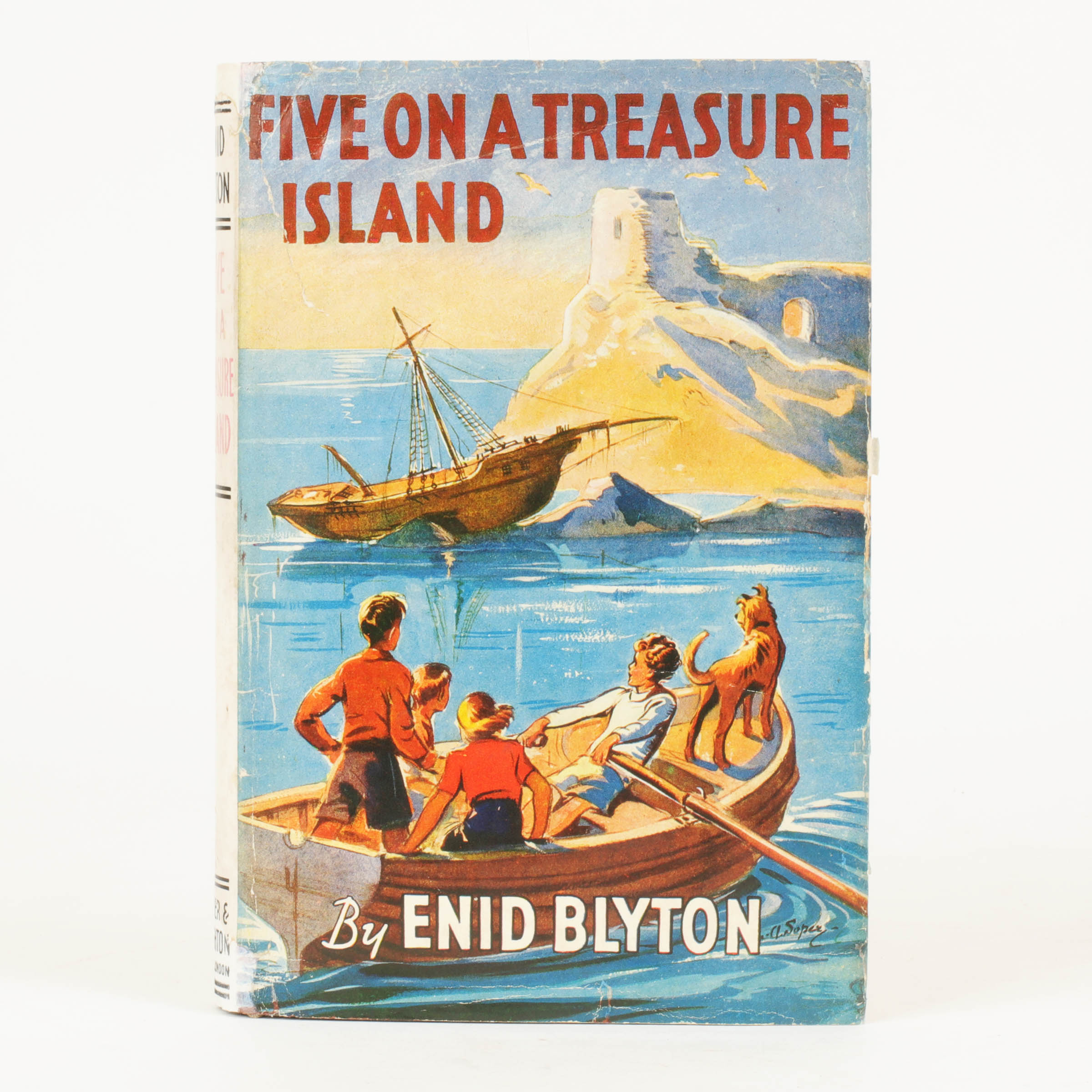
Four chapters in the series’ publishing history
1. The original British books, 1942–1963
Hodder & Stoughton published the classic adventures, with Soper’s distinctive visual world. The original reading order is based on these first publication dates, rather than on whatever numbered paperback series a reader happens to own.
2. International success and twentieth-century editions
As the books travelled, publishers translated titles, redesigned covers and sometimes changed numbering. That is why a Spanish, Portuguese and English copy of the same adventure can look remarkably different. When checking a collector’s edition or buying a replacement, the original English title is often the safest way of matching the work.
3. A debate about the language, 2010–2017
In 2010 the British publisher introduced a more substantially modernised version of the text. Hachette states that this version is no longer printed: in 2017, publishing reverted to the classic edition text, including limited editorial corrections made over time. This is not quite the same thing as claiming that every word matches an untouched 1942 first printing.
Readers can now choose between editions featuring Soper’s original artwork and paperback presentations with new cover art, including Laura Ellen Anderson’s 2017 collection. Both are valuable, but they offer different visual experiences.
4. New formats and new creators, 2018–2026
Full-length novels are only one entrance to this world. Illustrated short reads, graphic-novel versions and new adventures appear alongside the classics. The New Famous Five by Chris Smith, for example, introduces adventures inspired by Blyton’s world, with original and new characters. These are new works by a different writer, not lost manuscripts by Blyton.
What should a family read first?
For a first encounter, begin with Five on a Treasure Island, then follow the original 21-book order. The opening book introduces the friendship, Kirrin Island, the sense of independence and the discovery of a secret. Readers who would like an easier, shorter introduction can look at the colour short-story editions, while keeping them separate from the full novels.
Our suggested independent-reading starting point is roughly age nine and up, depending on reading fluency and tolerance for suspense. Younger children may love the same adventures read aloud together. This is our editorial guidance, not a universal publisher age rating.
How should we read Blyton today?
These are books of their historical moment. Some expressions, gender assumptions and portrayals of people may strike modern readers as dated. Reading critically need not diminish the fun: it can open useful conversations about the world of the 1940s and 1950s and how children’s expectations have changed. The estate’s publisher explains its approach to sensitive editorial updates on its official Famous Five history page.
Beyond the final chapter
Why not give the story a second life? Draw a treasure map, hide three written clues in the house, or create a code that a friend must crack. A walk in the park becomes a little more exciting when everyone starts noticing details. This is the spirit we love at More Books & Fewer Screens: stories that lead back into the world, not simply to another screen.
Continue exploring: all 21 Famous Five books in order and short stories, graphic novels and new adventures.
Research sources
- Enid Blyton: official biography.
- The Famous Five: official publishing history and textual policy.
- A graphic novel adaptation in Hachette’s catalogue.
Editorial note: we distinguish the publication date of the original novel from that of any particular edition, and separate historical evidence from our reading recommendations.